Welcome!

My business is to provide people the opportunity to sample the exciting and challenging fishing available at the southern end of Lake Michigan. This page is dedicated to showing a bit of the behind-the-scenes work it takes to do that and to highlight the trips and fun my customers are able to experience.

Sunday, February 22, 2015

IT'S ALL IN THE HAT

   I am a firm believer in “fishing hats.”  They don’t have to be adorned with flies and spinners like Colonel Blake wore in the TV Series, MASH.  They don’t have to have a stupid logo on them that proclaims the wearer to be a Master Baiter. But they do have to have plenty of Mojo.  Never underestimate the power of Mojo when it comes to a fishing hat.

  Other than Mojo, they need to have a couple of other features. A good fishing hat sports a brim to shield your eyes from the sun. A great fishing hat sports a brim that is dark-colored - preferably flat black in color - on the underside.  Hat color matters little other than in hot, sunny weather I choose lighter colors. As a matter of preference, my fishing hats are not camouflage. I have a hatrack full of camo caps, but those are for hunting, not fishing. If they have Mojo, it’s hunting Mojo, not fishing Mojo.

  Personally, I favor baseball style caps. Available nearly everywhere, if they were good enough to shield the eyes of Babe Ruth, Hank Aaron, Willie Mays and other baseball greats, they are good enough for me. I’m not saying John Wayne’s Stetson, a Mexican sombrero or other head dress style wouldn’t be as good or better, but I’ll stick to a baseball cap.

  Regardless of the style, they have to fit well. I’m often offered hats from a variety of companies who dole them out as advertising fodder. I own some farmland so I get seed corn hats. I buy insurance so I get insurance company hats. I write outdoor blogs so I get hats from outdoor products companies. But anymore, when offered a new hat, I slap it on my noggin and if it doesn’t feel “right,” I just hand it back. Some hats land on your head feeling as broken-in as your best walking boots, others are like trying to cram a square peg into a round hole.
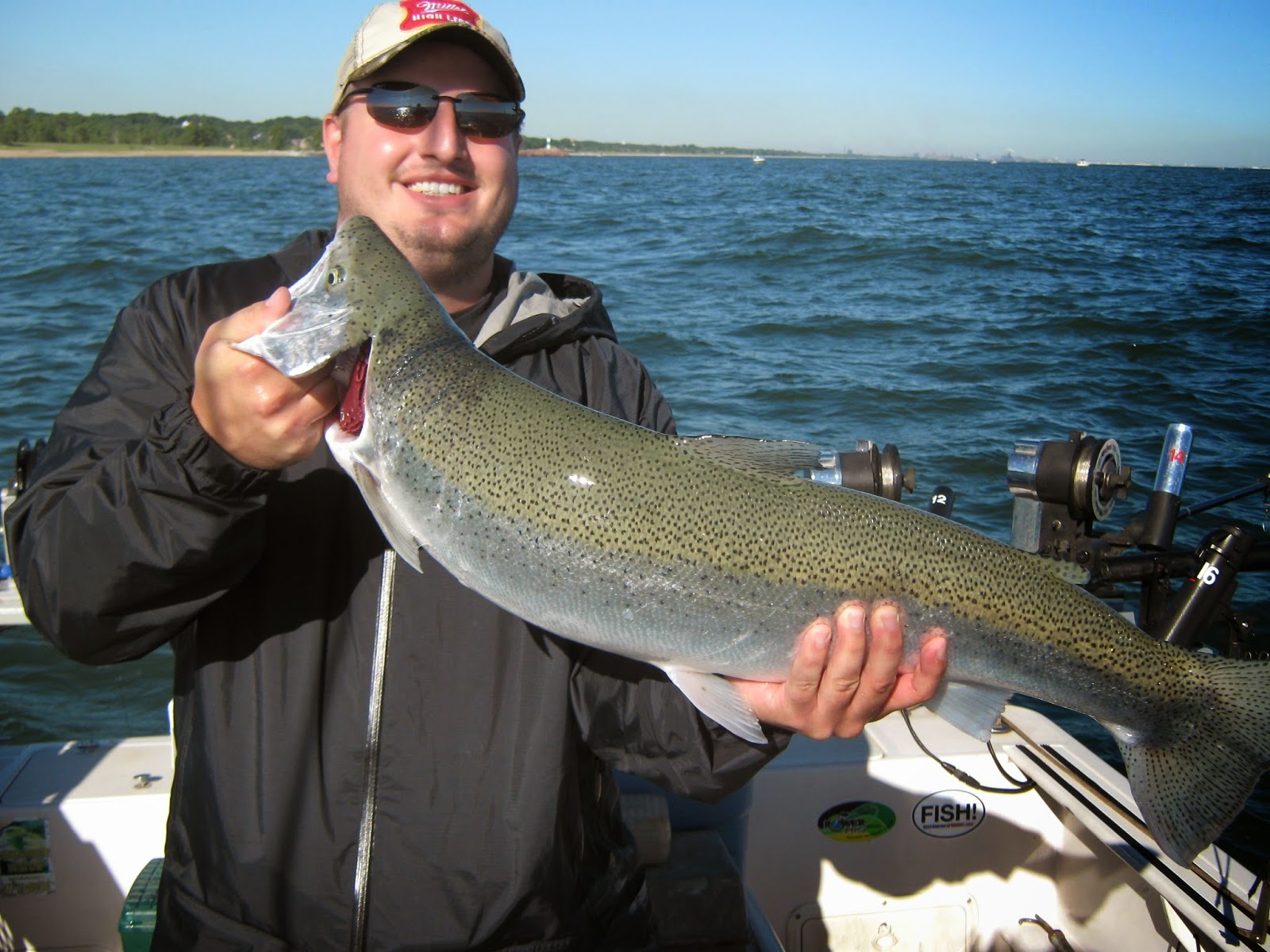
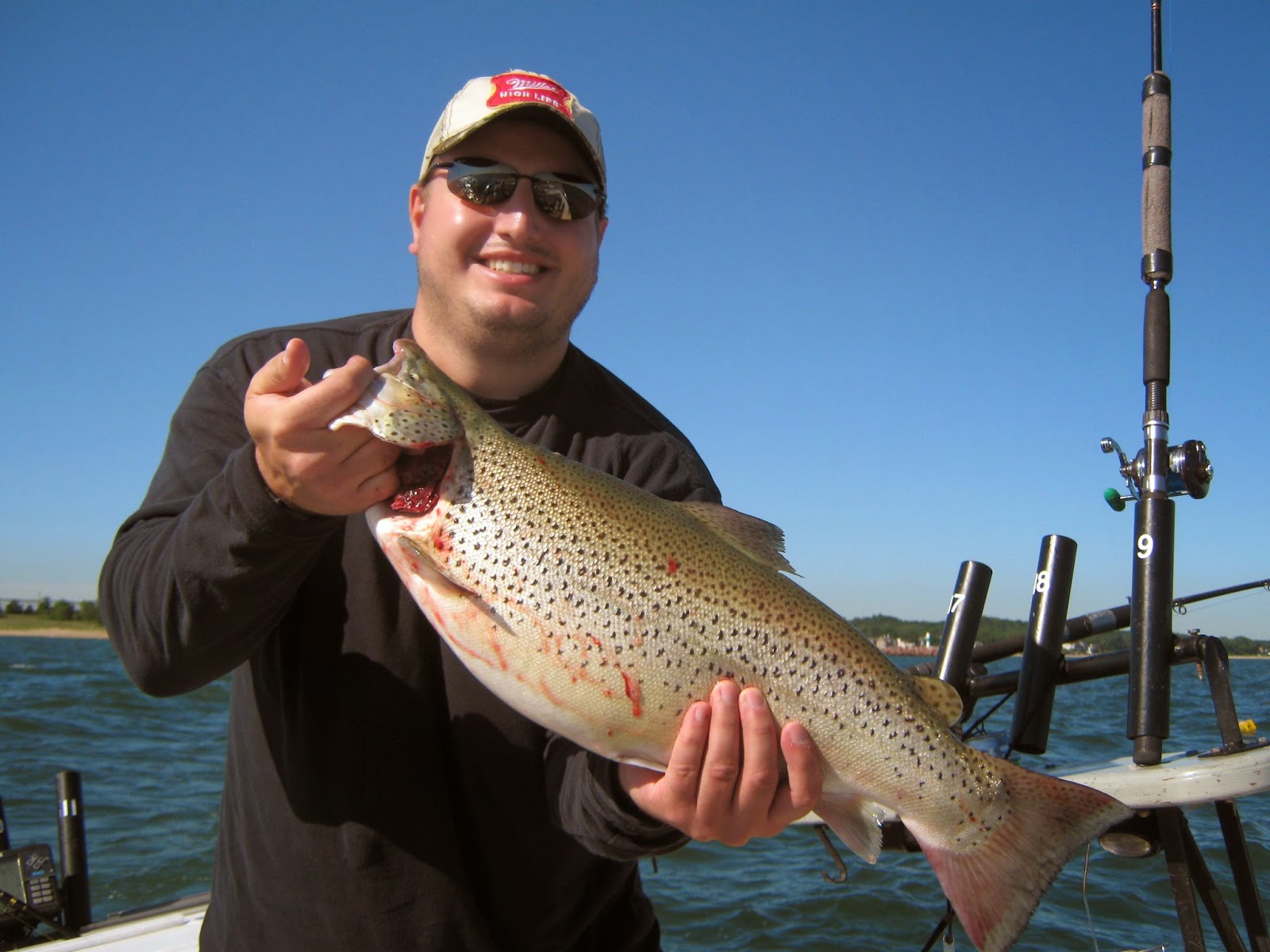
Because of the dark under-brim, the hat
on the right would be a better fishing hat. 


  But don’t overlook the Mojo.

  You can wear the best looking, best fitting hat on a fishing trip that was supposed to be next thing to fishing in a barrel and have the fishing fall flat. Immediately, if I’m wearing a new hat, it becomes suspect.

  On the other hand, if the trip goes better than you expected, admit it, the hat had the Mojo to put you over the top. So wear the same hat on the next trip and the next and don’t give up on it until it gives up on you.

Saturday, January 24, 2015

I WON AN ELECTION

    In the biographical information I provided to NACO when I was put on the ballot to be considered for a seat on their Board of Directors I wrote:

In every group to which I’ve belonged, I always became active and involved. I guess by nature, I’m a leader, not a follower. I’ve held various offices in both the Hoosier Outdoor Writers and the Association of Great Lakes Outdoor Writers, including President and Chairman of the Board.  I’m a superviser of my local county’s soil and water conservation district. I’m on my local county’s extension board and am a past member of the county’s planning commission. I’ve served as President and am now executive secretary of Indiana’s North Coast Charter Association.

   NACO, the National Association of Charterboat Operators, was formed in 1991 and now includes a membership of thousands of owners or operators of fishing, sailing, diving, eco-tours, and other excursion vessels carrying passengers for hire. NACO’s objective is to improve the professional charter boat operator's bottom line and to provide a strong voice in Washington, DC.
 
   NACO is a membership driven association proven to be successful because of the shared experiences of the Board of Directors, Executive Team and Regular Membership. NACO’s officers and board members consist of experienced licensed captains, who are actively involved in their local areas.
 
   NACO was formed out of a need to fight costly government regulations that threatened to cripple the charter boat industry. The organization keeps track of issues affecting the industry and NACO officers and board members regularly represents charter operators before Congress and Regulatory Agencies. Over the years NACO has succeeded in saving charter boat operators millions of dollars and prevented excessive, time-consuming and needless reporting.
 
   As a new board member, I plan to lurk in the background initially, assessing the personalities and learning the inner workings of the group. As time progresses, no doubt I'll become more involved and a better representative for charter boat operators in the Great Lakes and elsewhere. 
 
   Any NACO members reading this who voted for me:  THANKS. The rest of you: WISH ME LUCK!


Saturday, December 27, 2014

FISHING THE FIFTY QUEST

David Howard traveled from Virginia to catch an Indiana Steelhead
 No doubt there are dozens of reasons people hire me to take them on a fishing trip on Lake Michigan. They want adventure, sport, to try something different. Perhaps fishing Lake Michigan is on their bucket list or they know it’s one of their best opportunities to catch a big fish, close to home. Some just like catching tasty fish or fish they can keep to eat without feeling guilty. Few people climb into the Brother Nature because they are on a quest.

That’s what happened a few years ago when I met David Howard at the docks one morning in late June. David originally scheduled his fishing time to see how many fish of different species he could catch. Once he caught most of the species available in his home state of Virginia, he started traveling to other states to fish for other kinds of fish. Which brought him to me.

My website (www.brother-nature.com) has a fishing calendar for people to use in planning when they’d like to come or what to expect when they get here. Howard saw the calendar and scheduled for late June when it's expected to get a mixed bag, each time out. Specifically, he wanted a lake trout, a steelhead or a coho salmon to add to his list. Catching even one of these three would be a successful trip, two of the three would be great and all three would be fantastic.

Lakers were not to be.  A cold front had pushed through leaving miles of 3 to 5 foot waves between the beaches and the deep water where lakers could be found. So we concentrated on nearshore, Skamania strain steelhead. Success came quickly with a 14-pound steelhead. Next a brown trout came to the boat. Browns are rare in summer. He'd already listed a brown caught in a Virginia stream, but those fish are measured in inches. This one weighed over nine pounds, still his largest ever brown trout.  

The waves diminished by mid-morning. The lakers were still out of the question but I was able to steer the boat to slightly deeper and cooler water where Howard caught a beautiful coho weighing over seven pounds. Another fish for his "list."

Soon after our outing a new quest was born. Howard realized his original goal to catch a variety of fish had taken him to more than half the states in the USA. Could he fish all fifty states?

Not David's first brown trout, but his largest! 
It looks like it!  A trip to Hawaii in 2015 will complete his journey. How many people can say they’ve visited all 50 states, much less fished all 50 states.

In anticipation, Howard has set up a website www.fishingthefifty.com which includes photos from each trip along with a short essay detailing what fish he caught in each of the states. Click it up, it’s very interesting and he's caught some magnificent trophies.

I’m happy and proud to have been a part of David’s quest.

Tuesday, November 4, 2014

GALES OF NOVEMBER CAME EARLY

OMG!  Which is text-speak for Oh, my god!  I don’t text much but in this case this is certainly an OMG moment. I watch the south Lake Michigan weather buoy read-out almost every day during the fishing season. It’s only about 50 miles or so from the area I normally fish and when dealing with weather and weather patterns, 50 miles is hometown news.

So today, regardless that the Brother Nature is stowed safely away for the winter, the strong wind warnings, lake snow forecasts, etcetera, I clicked up the midlake buoy.  I’ve never seen anything like this!
MID-LAKE BUOY

I’ve been out on the lake multiple dozens of times so I know what the wind and wave conditions were, first hand.  Then I’d compare it with the midlake buoy, “real-time” reports.  The wind conditions were usually spot on with my “guestimation” of how strong the winds were blowing.  The wave conditions never aligned.  I finally decided the buoy didn’t measure wave heights from the bottom of the trough to the peak of the wave, it was more like the buoy measured only from mean lake level to the peak of the waves.

There’s probably “scientific” reasons for doing it this way, but if you are out on the lake, expecting two-foot waves, as measured by the buoy, and are really in four foot waves, measured from trough to peak, that’s a big difference.

Lake Michigan must have looked like this! 
So looking at today’s weather buoy info (October 31, 2014) is pretty darned scarey. I’m glad I’m not out there.  The wind is blowing from the north at 38.9 Knots (44.7 miles per hour). Gusts are 50.5 knots. The buoy at Michigan City pegged a gust at 67 miles per hour.

More importantly, the wave heights measured by the buoy are 21.7 feet.  I’ve never been out there to decide if the measured waves to actual wave heights (2 foot vs. 4 foot) is similar when the buoy registers waves of double digit heights; but if it does, that means 40-plus foot waves blowing down the lake. I’m glad I’m not there!

Sunday, September 21, 2014

QUESTION # ONE

March and April features cold temperatures
but hot action for smaller-sized fish. 
When the phone rings or I open my email and get a question from a potential customer it could be anything. I’ve been asked about bringing a newborn baby on board. I routinely get asked about what fishing license is needed. Where to meet?  What time will we start?
But the number one question whether I’m on the phone, at my booth at a sport show or asked in an email: “What’s the best time of year to come fishing with you?”
Sadly, that’s the toughest question a potential customer could ask.
Let’s say the fall run of chinooks is going and the fish are active. The number of fish caught is dictated more by the amount of time it takes to boat one of these behemoths, then get set up for another pass through the staging area. At the end of the trip, it’s hard to get the cooler shut there are so many whoppers in the box.
That’s got to be the best time to come, right?  Perhaps.
But perhaps the next day the fish are moody and we troll all morning and only get one or two bites. That happens with spawning run fish. Perhaps the group includes a petite mother and an eight year old child.  They may not be able to handle the power of a full grown chinook salmon. Dad might like it, but the others would have had more fun in the spring catching more, but smaller-sized fish.
Summer and fall features fewer, but larger
fish to catch. 
I tell people “winter lasts until sometime in June on Lake Michigan. One day we need longjohns and gloves, the next day, it’s summer and hot.”  That’s not far from the truth. The big lake is slow to warm and a day predicted to be “shirt-sleeve” weather ashore may require a warm jacket or more a few miles offshore.
If the goal for your group is to spend an enjoyable, warm, sunny day on the lake and catch a few fish to ice down for dinner, a slow “catching” day in July or August may be your perfect outing.  If your goal is to catch a limit of fish and you are a duck or deer hunter, accustomed to spending hours outdoors in chilly to downright cold weather, come in March or early April, and wear your cold weather gear.
I had an individual who fished with me several times in early season and always caught a limit of cohos, browns or steelhead, but nothing big. Then he booked a fall trip to try for a mature chinook. He succeeded!  In five hours he caught two big salmon over 15 pounds.
“I’m never coming back with you in the spring,” he told me.  “I’d much rather come out and catch one or two of these huge fish than catch a limit of the small ones in the spring.”
Me?  I like it all. I like the fact the fishing changes month to month as the season progresses.  My advice? The best time to come is when you can. Bundle up if necessary. Wear shorts and flip-flops if you can. Catch the fish that bite whether that be in early March or late September. There are no bad times to give Lake Michigan a try.

Friday, August 15, 2014

UNCURSED

Most writers have experienced the “writer’s curse.”  You head for a hunting, hiking or fishing destination and Mother Nature and Lady Luck team up to cast aside the best laid plans or make the hot bite cold as ice. So it was for many of the anglers who headed for Chautauqua County, New York for the Association of Great Lakes Outdoor Writers annual “Cast and Blast” last May.
The prime fishing destination for the trip was to be Lake Erie with abundant walleye, smallmouth bass and other fish. Lake Erie looked more like a frozen daiquiri than a fishing destination with ice chunks the size of basketballs covering the surface. Lake Chautauqua, westernmost of New York’s famed finger lakes provided a great substitute but only a substitute for those of us wanting to fish Lake Erie.
So the Chautauqua County Tourism people invited us back and I took them up on the offer. You know you are off to a good day of fishing when one of the group boats a mega-walleye in the first few minutes of fishing. Using tactics familiar to me (as a Lake Michigan troller) we boated walleye after walleye (with lake trout, white bass and sheepheads in the mix, as well.)
Western New York is beautiful country. Fields, forests, vinyards, Great Lakes and inland lakes. And good fishing whether you are an outdoor writer or not!

Sunday, August 3, 2014

RESCUED

After a perfect weather day and a few cooperative fishes, I was headed home. Southbound on I-65 in heavy traffic near Hobart, IN, a car pulled next to me, slowed and started honking. I glanced over and the driver was yelling and pointing back towards my trailer. It wasn’t the “hey, how are you doing” friendly greeting that occasionally happens.
Not the way to get home from the lake. But thanks to BoatUS,
the price of the repair will be more than the price of the tow truck. 
  I glanced in the side view mirror and immediately noticed I could see much more of the rear tire on the trailer than is normal. Immediately, I pulled over to the berm lane as far as possible but since there’s a guard rail, I couldn’t pull over as far as I would have liked.
  With cars and trucks whizzing by only a few feet away, I snuck back to see if my instant diagnosis was correct. Yep, bearing failure.
  I carry a spare wheel hub and tools with me when trailering. However, dragging the wounded trailer to the next exit without doing permanent damage to the spindle was unlikely and I’d have been killed trying to make the repair along the road.
   Luckily, when I renew my BoatUS membership, each year, I select the “Trailering Club” option. It’s a sort of AAA for trailer boaters. I called the 800 number, relayed the information to the BoatUS lady who answered and long story short, relatively soon a flatbed pulled up to load up the boat and trailer.
   Forty-five minutes later we were unloading at my house, worse for wear, but home where better tools and cold beer resides!  The BoatUS dispatcher called with perfect timing, I handed my phone to the driver and in minutes, the deal was sealed. BoatUS paid him with a credit card, I owed zero!
   The BoatUS Trailering Club costs $14 in addition to the regular membership dues.  I asked the driver what the bill would have been. Over $300.  Money well spent.
   Even if you only live a few miles from the marina, think about the most inconvenient spot for you to have bearing problems, flat tire or some other mishap. Would $14 for help seem a wise investment?